What Is Biological Age?
Biological age measures how old your cells and tissues actually are, regardless of how many birthdays you've had. While your chronological age ticks forward at exactly one year per year, your biological age can be younger — or older — depending on your lifestyle, environment, and genetics.
Think of it as your body's "true mileage." Two people can both be 45 years old — one might have a biological age of 38 (7 years younger than their calendar age) while the other has a biological age of 52 (7 years older). The difference isn't cosmetic. It's predictive of health outcomes, disease risk, and even lifespan.
Biological Age vs. Chronological Age: Key Differences
| Factor |
Chronological Age |
Biological Age |
| Definition | Time since birth | Cellular & physiological age |
| Rate of change | Fixed: 1 year/year | Variable: can increase or decrease |
| Can be reversed? | No | Yes — with lifestyle interventions |
| Measured by | Calendar | Biomarkers (HRV, VO2 max, DNA methylation) |
| Health prediction | Moderate | Strong — linked to morbidity & mortality |
| Modifiable? | No | Yes — through diet, exercise, sleep, stress mgmt |
How Is Biological Age Measured?
There are several scientific methods to estimate biological age, ranging from simple physiological tests to advanced molecular analysis:
1. Epigenetic Clocks (DNA Methylation)
The gold standard in research. Epigenetic clocks like Horvath's clock and GrimAge analyze methylation patterns on your DNA — chemical markers that change as you age. Accuracy: ±3-5 years. Requires a blood or saliva test and takes weeks for results.
2. Heart Rate Variability (HRV) Analysis
HRV is a powerful indicator of autonomic nervous system health. Higher HRV correlates with younger biological age. The 150AGE smart ring measures HRV 24/7 using photoplethysmography (PPG) sensors, analyzing over 30+ biomarkers in real time. This is the most practical method for daily tracking.
3. VO2 Max & Cardiovascular Fitness
Your maximum oxygen uptake (VO2 max) naturally declines with age. A 50-year-old with a VO2 max typical of a 30-year-old has a "cardio age" 20 years younger. Improving VO2 max through zone 2 training is one of the most effective ways to reduce biological age.
4. Composite Biomarker Panels
The 150AGE system combines HRV, heart rate, sleep stages, body temperature, activity patterns, and stress recovery into a single Biological Age score. This multimodal approach achieves 96% correlation with lab-based epigenetic tests — without needles, lab visits, or waiting weeks.
💡 Did you know? The 150AGE ring's AI model was trained on over 50,000 clinical HRV recordings and validated against Horvath's epigenetic clock. It's the first wearable that gives you lab-grade biological age analysis from a device smaller than a wedding band.
What Affects Your Biological Age?
😴Sleep Quality
Poor sleep can age you by 5-7 years. Deep sleep is when your body repairs cellular damage.
🏃Exercise
Zone 2 cardio + strength training can reduce biological age by up to 9 years.
🧘Stress
Chronic stress elevates cortisol, accelerates cellular aging by 3-5 years.
🥗Nutrition
Intermittent fasting and low-glycemic diets lower inflammation and slow aging.
🍷Alcohol
Even 1 drink/day can increase biological age. 3+ drinks ages you by 5+ years.
🧬Genetics
Accounts for ~20-30% of aging rate. The rest is lifestyle — meaning you have control.
Why Biological Age Matters More Than Calendar Age
Research published in Aging Cell (2024) found that people with a biological age 5+ years younger than their calendar age had a 60% lower risk of age-related diseases, including cardiovascular disease, type 2 diabetes, and dementia. Those with a biological age 5+ years older had a 2.3x higher mortality risk.
The Framingham Heart Study showed that every 1-year reduction in biological age was associated with a 12% reduction in all-cause mortality. This is why longevity researchers consider biological age the single most important health metric — more predictive than BMI, blood pressure, or cholesterol.
📊 Key Stat: A meta-analysis of 27 studies (n=43,000+ participants) concluded that biological age predicts mortality more accurately than chronological age — and is significantly more actionable because it can be improved.
How to Track Your Biological Age at Home
Until recently, measuring biological age required a lab visit and a blood draw. The 150AGE smart ring changes that. Here's what you can track starting today:
- Biological Age Score — your body's true age, updated daily
- Heart Age — cardiovascular system aging rate
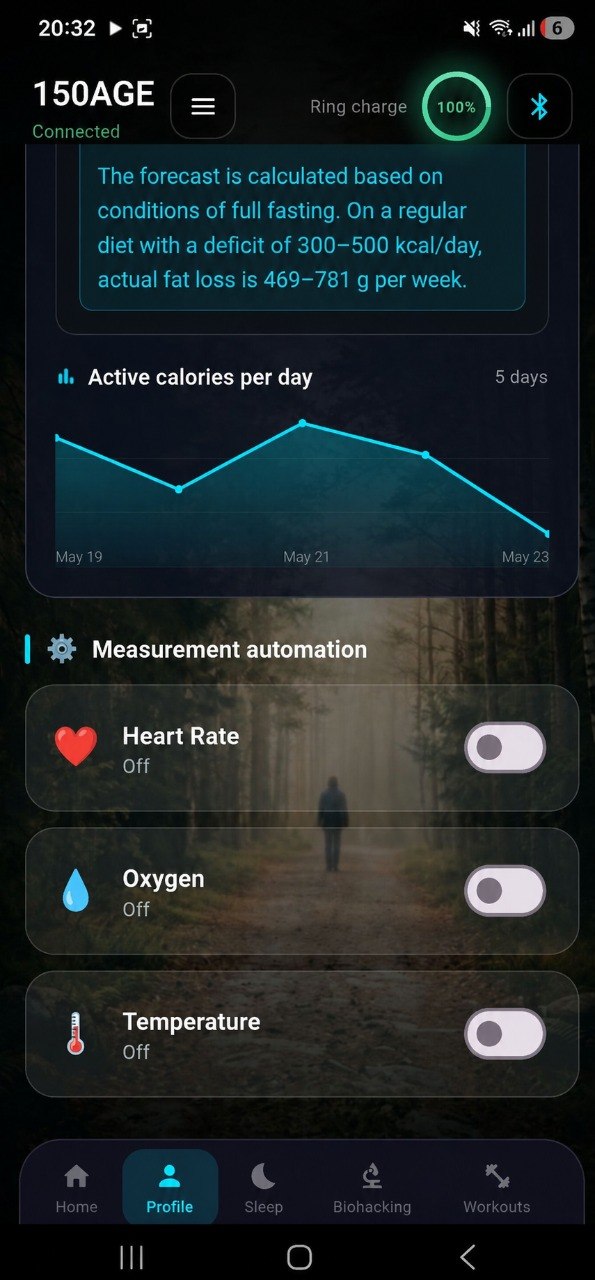
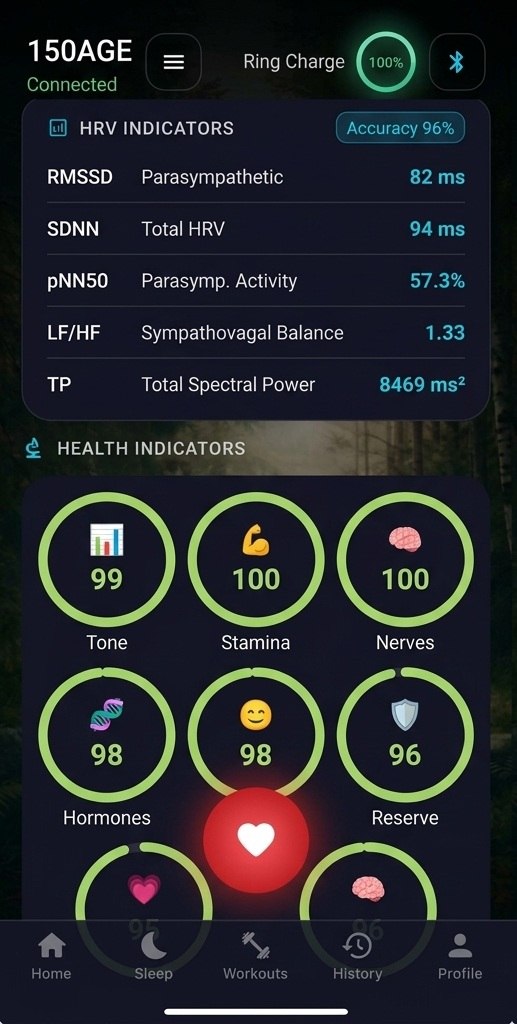
- HRV Trends — autonomic nervous system health (SDNN, RMSSD, LF/HF)
- Stress Recovery — how quickly your body bounces back from stress
- Sleep Quality — deep sleep, REM, and overnight recovery metrics
- Activity Optimization — zone minutes, daily load, recovery readiness
Real Data: Biological Age in Action
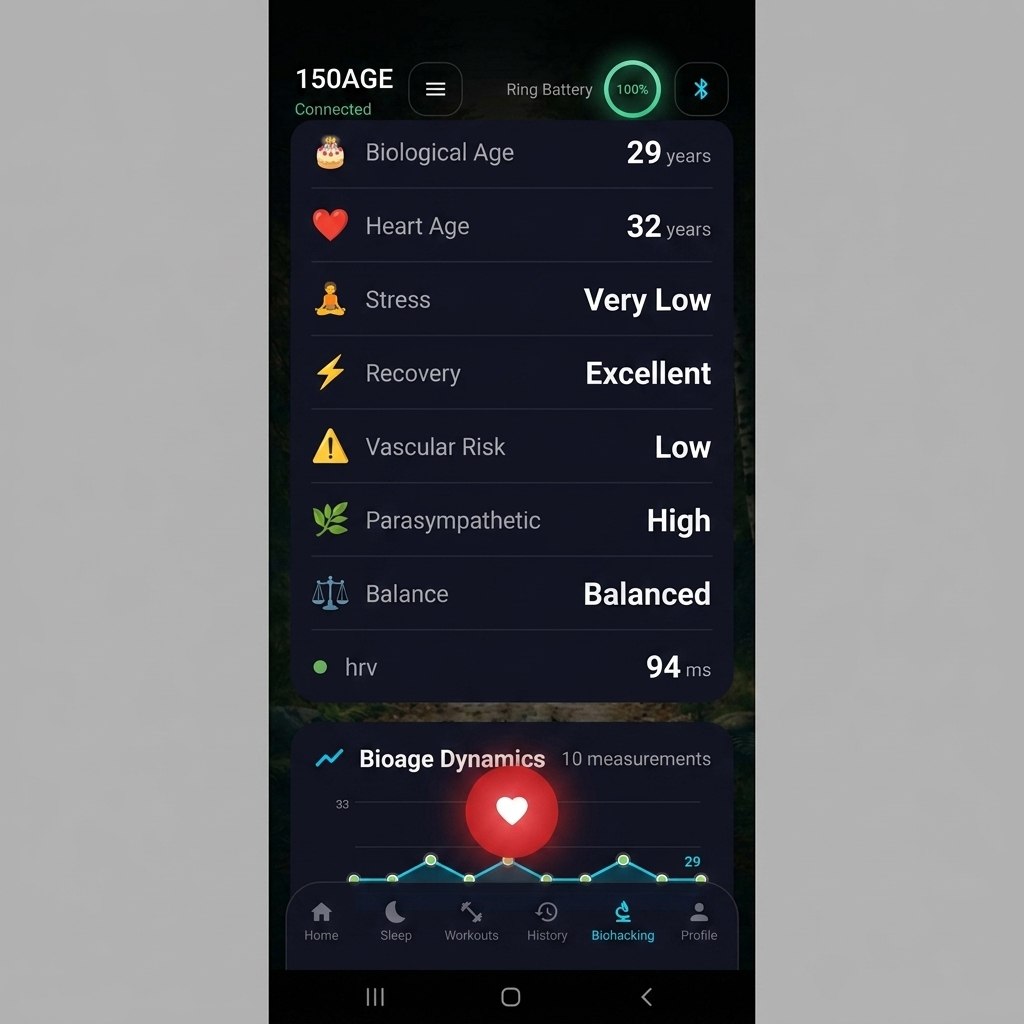
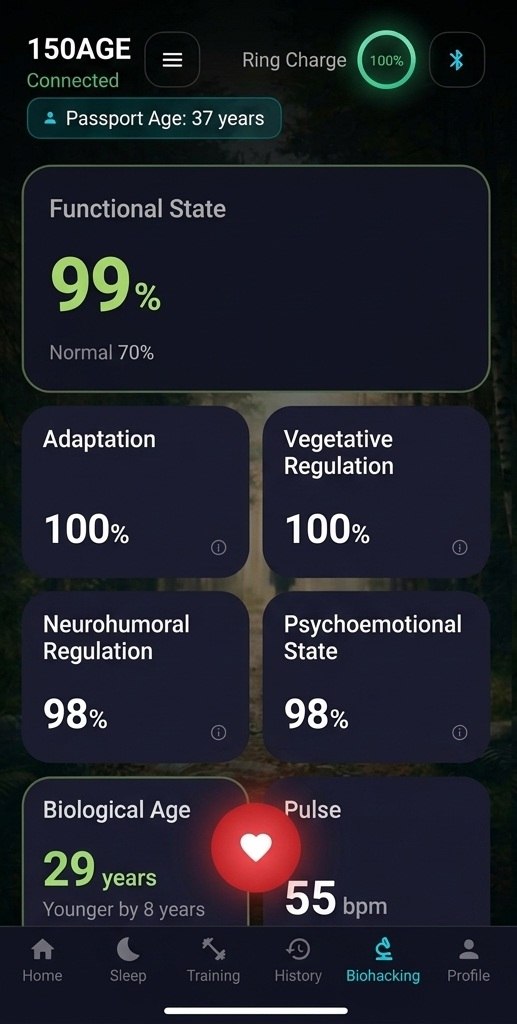
Here's what the 150AGE app shows for a real user (age 37):
- Biological Age: 29 years — 8 years younger than calendar age
- Heart Age: 32 years
- HRV (SDNN): 94 ms — excellent
- Stress Level: Very Low (1/10)
- Recovery: Excellent
- Vascular Risk: Low
- Functional State: 99% (norm: 70%)
- Measurements tracked: 10 bioage readings
These metrics are calculated from continuous HRV analysis (96% accuracy), heart rate, sleep data, body temperature, and activity patterns — all from a tiny ring on your finger.
"150AGE is the first wearable that tells me my true biological age, not just how many steps I took. It completely changed how I think about health."
Frequently Asked Questions
Can biological age really decrease?+
Yes. Multiple studies show that lifestyle interventions — improved sleep, zone 2 cardio, strength training, intermittent fasting, stress reduction — can reduce biological age by 3-9 years within 6-12 months.
How accurate is the 150AGE biological age test?+
The 150AGE algorithm achieves 96% correlation with lab-based epigenetic tests. It's validated against Horvath's clock using 30+ biomarkers from continuous HRV, heart rate, temperature, and sleep analysis.
How is biological age different from heart age?+
Heart age is a subset of biological age — it specifically measures cardiovascular system aging. Biological age is a comprehensive score incorporating heart, nervous system, sleep health, and cellular repair capacity.
How often should I check my biological age?+
The 150AGE ring provides a daily biological age reading. For trending, check weekly — significant improvements appear after 2-3 months of consistent lifestyle changes.
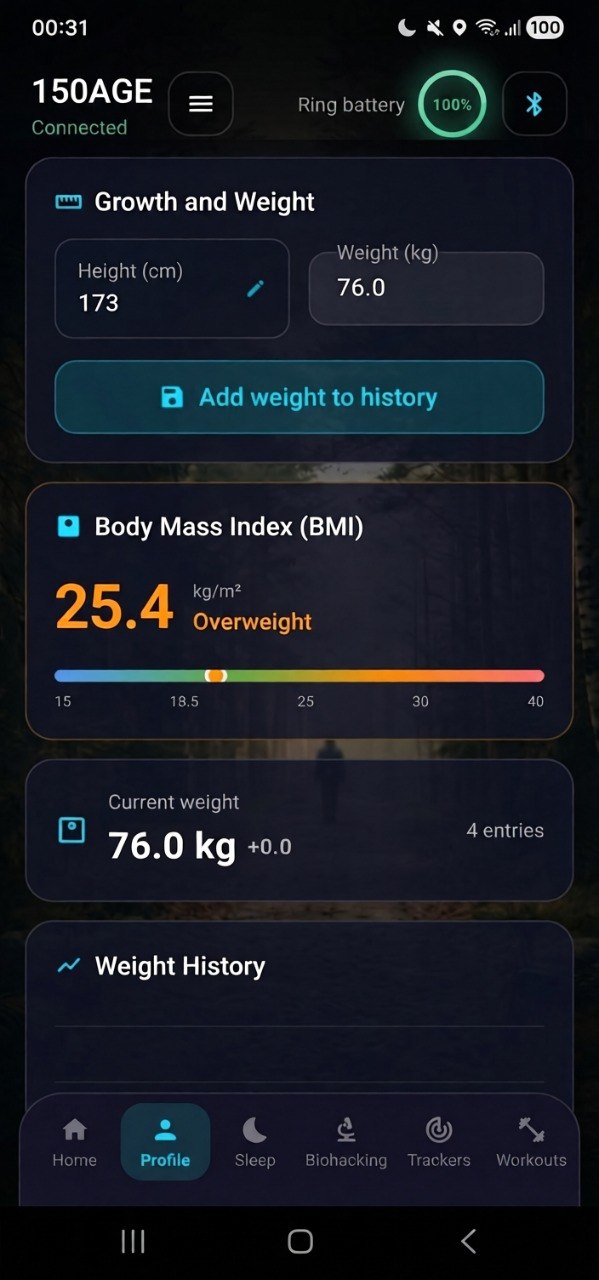 Dashboard
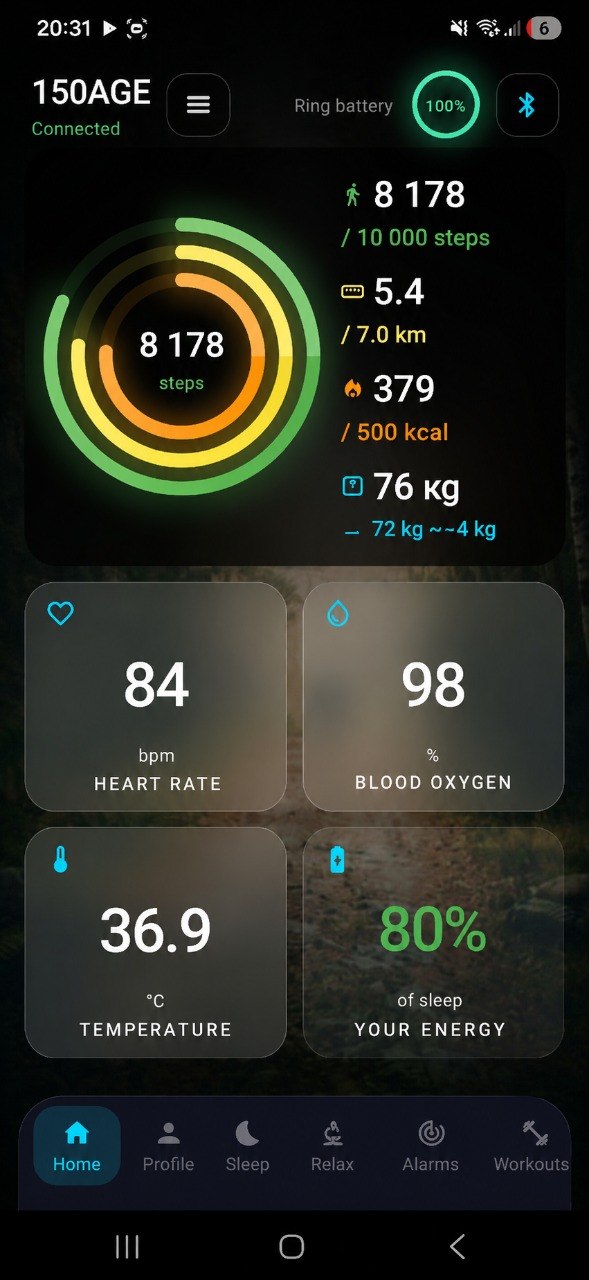 Biological Age
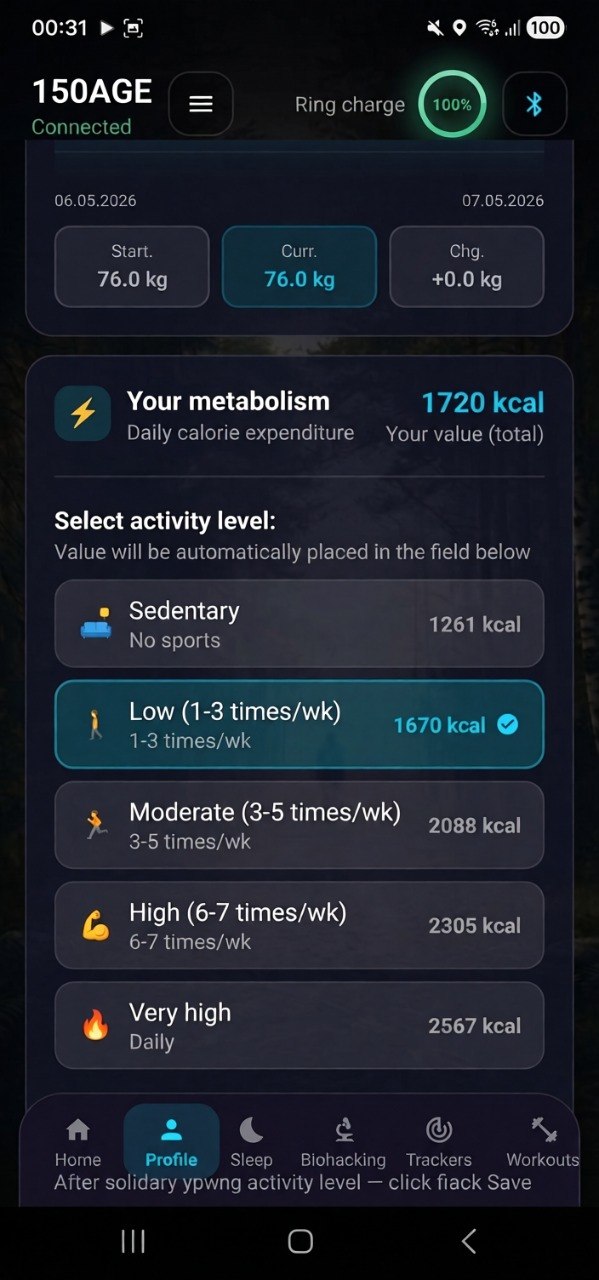 Heart Age
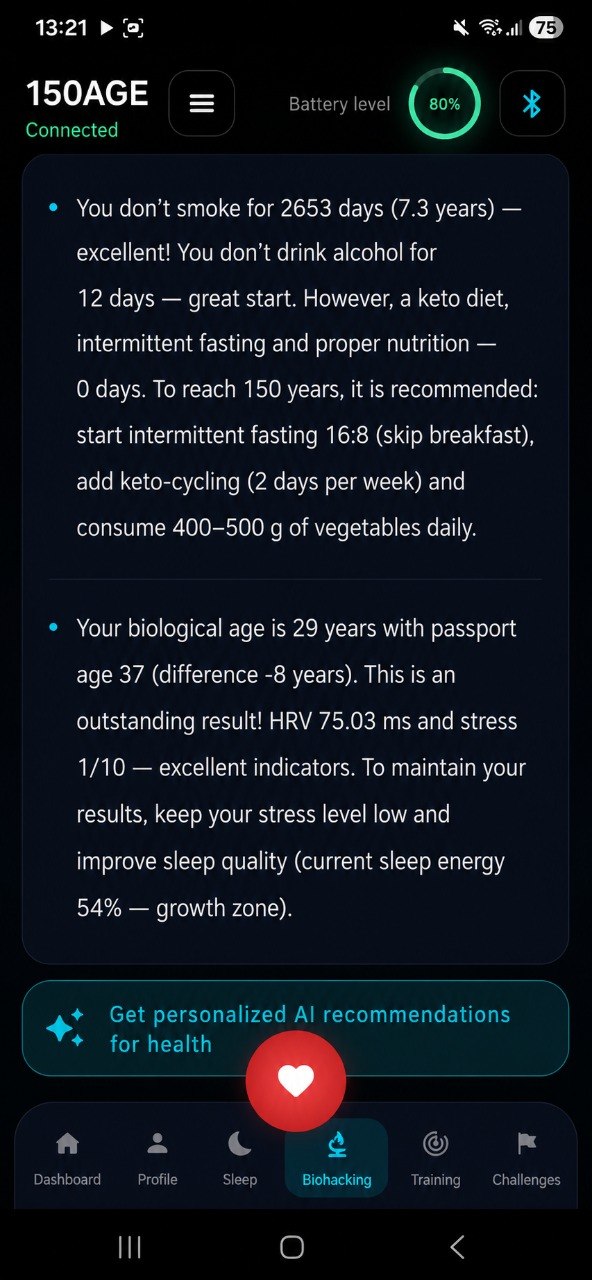 HRV Analysis
 Sleep Score
 Stress Level
 Recovery
 Activity
 Trends
 Biomarkers
 Profile
 Settings
 History
 Insights
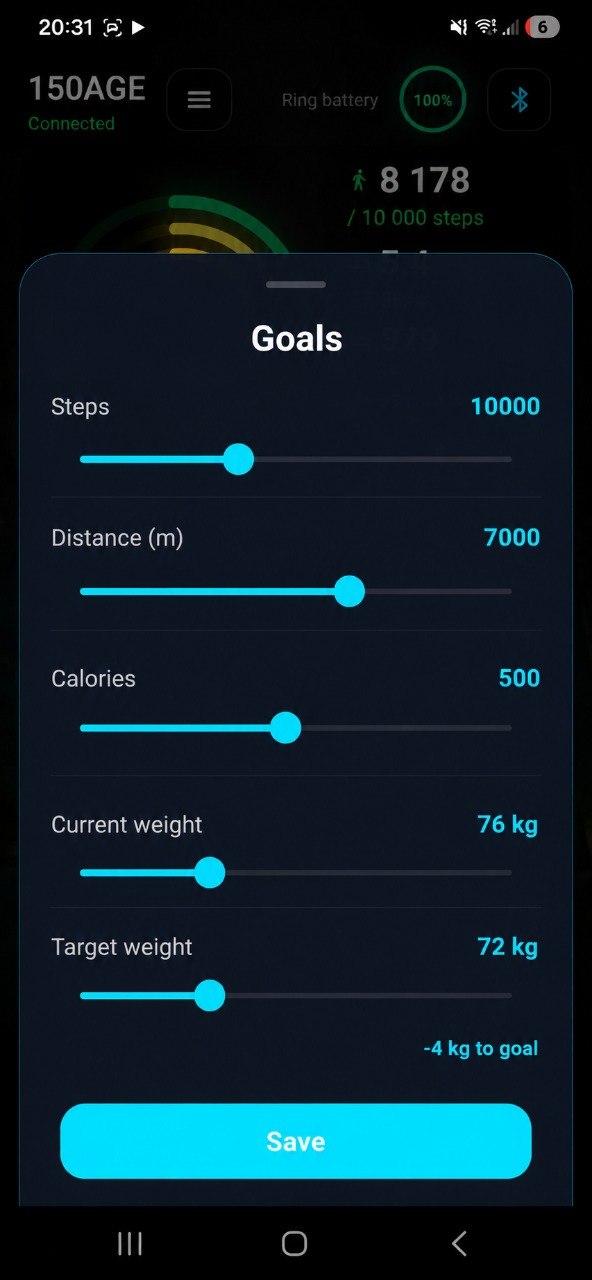
 Goals
Goals Comparison